 RSGB News
Well not quite…!
Roger M7XRH recounts his journey into amateur radio.My amateur radio journey began around 1970, when I traded a large box of electrical components for a very heavy Marconi CR100 that I had to take home in a wheelbarrow.
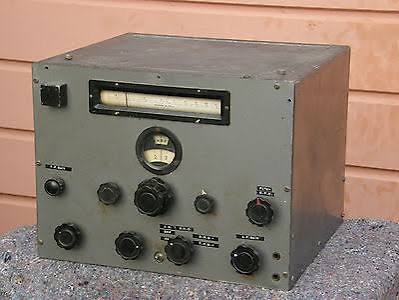
I used this for about three years listening to short-wave broadcasts from around the world, once receiving an amateur in Australia.
As a Scout, I attended a radio and electronics weekend at Gilwell Park, home to G3WGP and G8WGP (now GB2GP), where I first saw amateur radio in action and immediately ordered the RSGB examination handbook.
The book was unfortunately left to gather dust, but I continued to enjoy repairing / building valve and transistor radios and made prototype control circuits for an industrial instrument designer.
I actively looked for a career in electronics, after visiting Southeast London Technical College (SELTEC). However, after doing Biology at A level, my job aspirations took a different route.
I studied applied Biology and ended up qualified in Immunochemistry and was involved in research at the Middlesex Hospital’s Department of Immunology, then moved into the commercial medical diagnostics industry where I worked for 40 years before retiring 4 years ago.
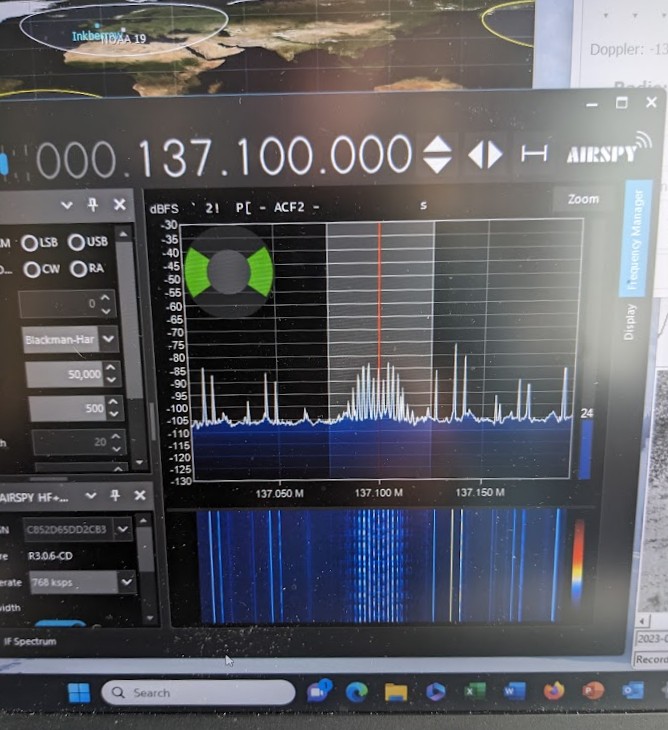
With a busy family life, two wonderful sons and travelling extensively for my job, for years there was no time for any radio related activities, save for buying a couple of SDR’s, a Neolec dongle and an AirSpy Discovery HF, a couple of years before I retired.
My radio hobby re-ignited, as the world of radio had changed beyond recognition, with so many more interesting aspects readily available.
I was amazed by the plethora of advancements, and found that with a bit of dabbling and trial and error, I could:
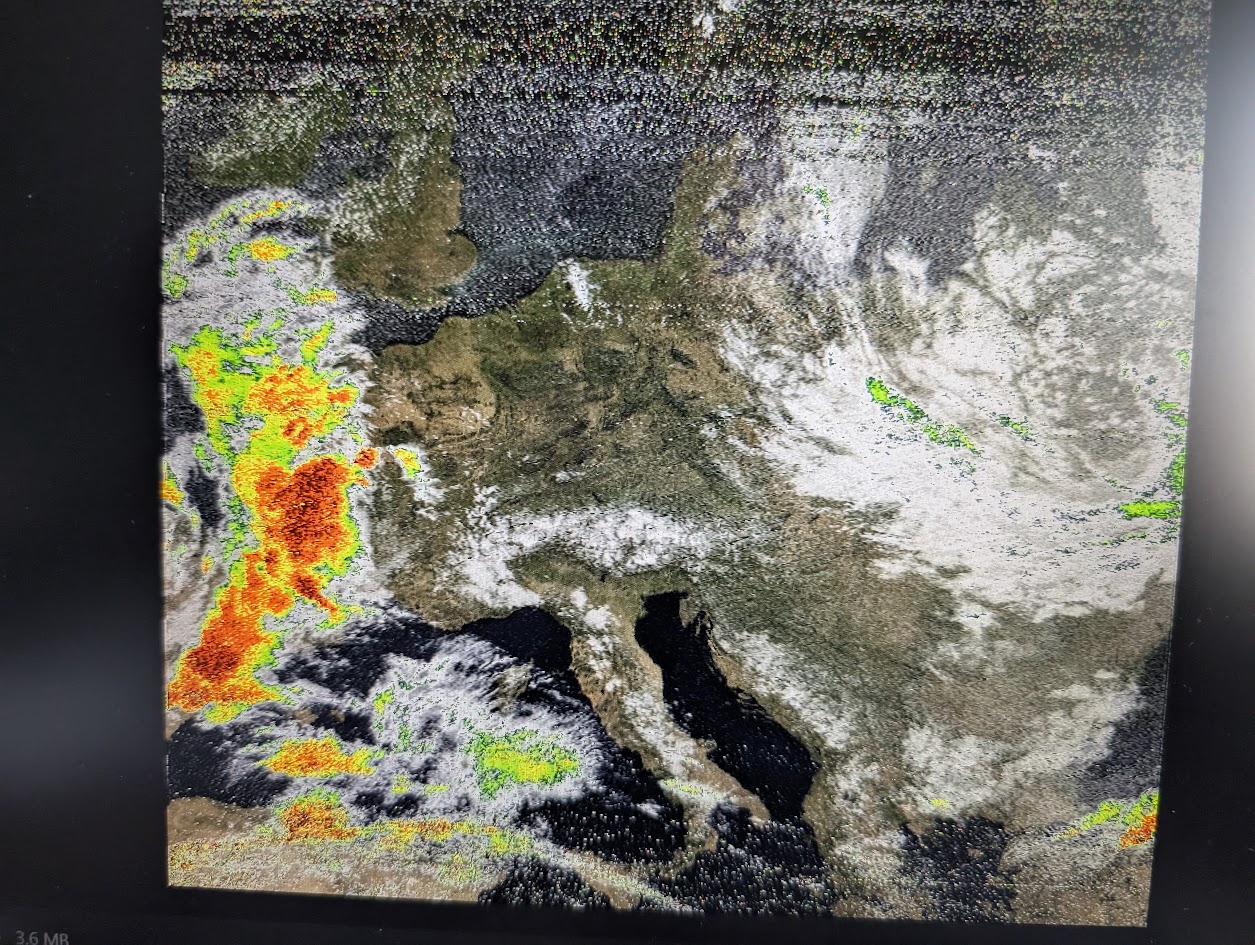
- Receive live NOAA weather satellite images (before they were decommissioned) using a telescopic v-dipole on the end of a long piece of wood stuck out of my study window.
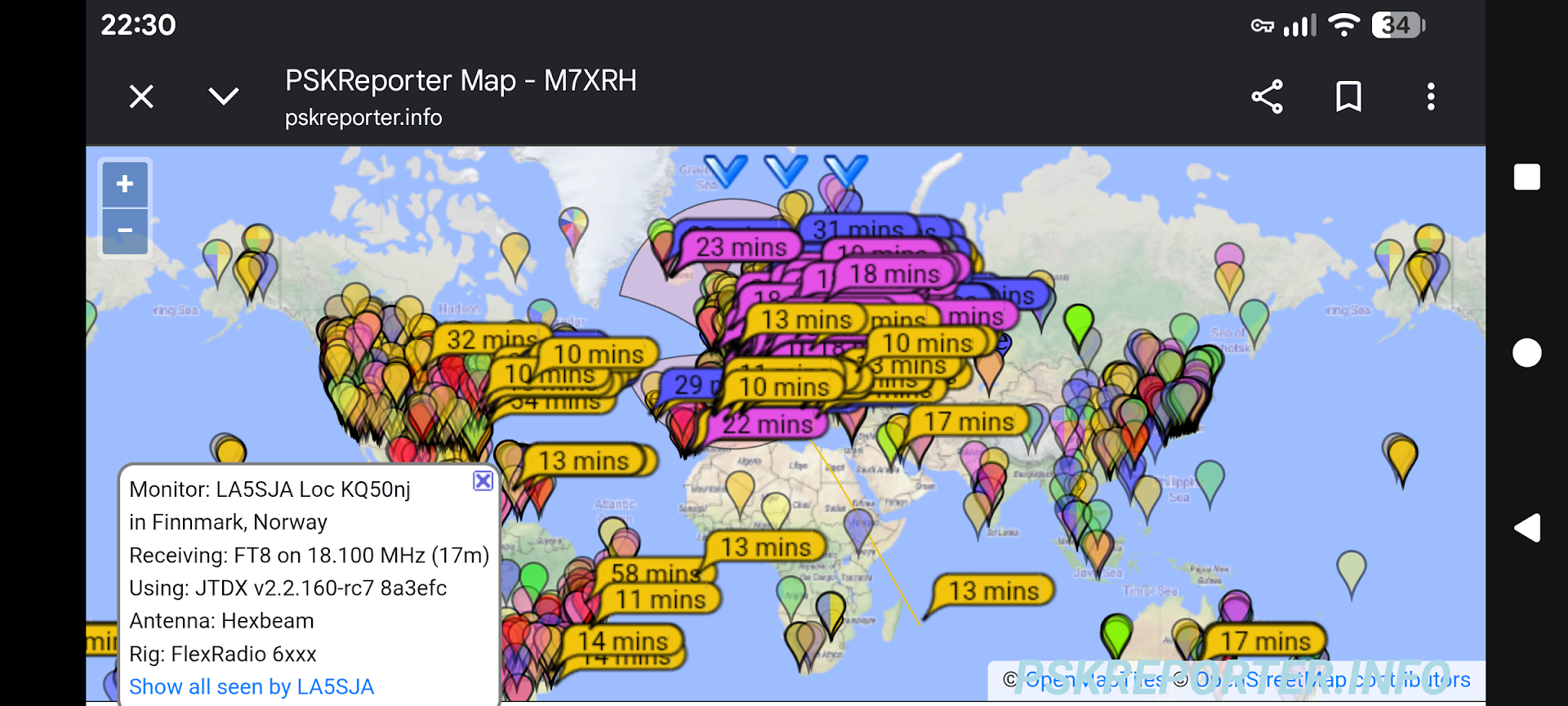
- Listen to amateurs and see where they were located on PSK reporter.
- After reading a Practical Wireless article in February this year, track small box satellites (TinyGS) with a ESP32 based LoRa receiver and home-made 433 MHz quarter wave ground plane antenna that was suction stuck to the window.
- Look at data from Inmarsat and Iridium satellites via a patch antenna made following Matt Miller’s (M0DQW) Tech Minds YouTube channel.
- Track and listen to aeroplanes.
Finally, at the beginning of this year I discovered digital FT8 using my ATS Mini V4 and the FT8TW app. This led to frequent strange noises coming from my study; enter the frequently cited joke: "Dad's contacting the aliens again!"
Early this year, I rediscovered a Berec battery radio from my teens and long since buried in the loft. A circuit diagram was inside, and the case was date stamped with my birth year, so no question I just had to restore it.
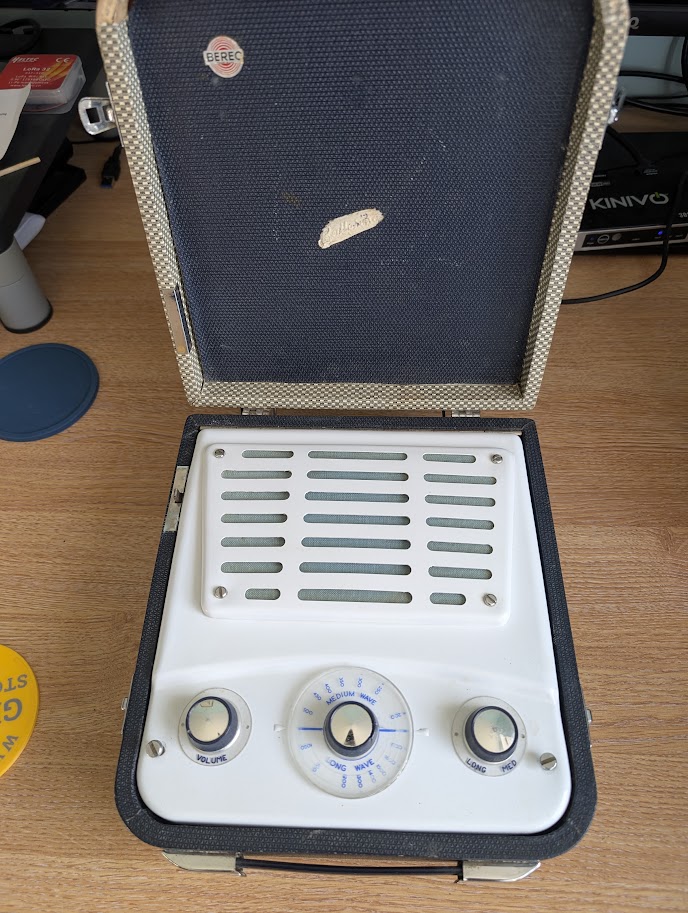
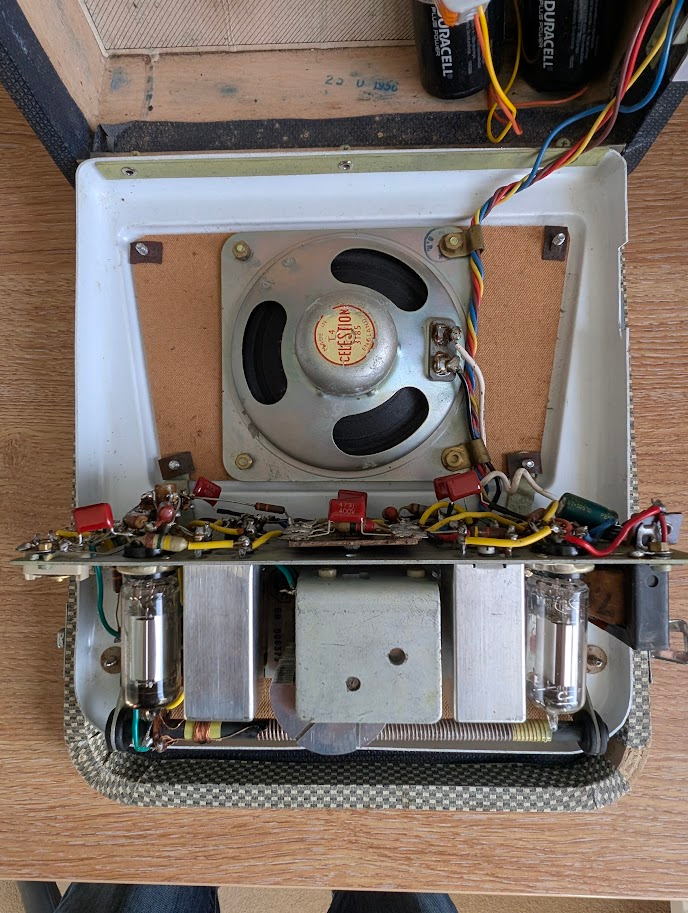
I replaced the cracked capacitors, cleaned the switches, and powered the 1.5V heater supply before gingerly increasing the HT voltage.
At 45V, I could hear static and I was able to tune into a crackly station. Bent shorting tuner vanes were the cause; once straightened, the radio worked well on MW and LW at the full 90V. Sadly, with the demise of Droitwich LW is now silent.
In May this year I made the decision to “get on air” as I was amazed that with good propagation conditions you could transmit considerable distances with a QPR setup.
As I frankly knew next to nothing and wanted to take the Foundation exam, which I had enthusiastically booked for the 31st of July, I reasoned that the best course of action was to join a local radio club. I attended my first Wythall Radio Club meeting on the 30th June 2026, and just prior to that started the 3-week Essex Ham Foundation course, which was excellent.
John M6KET was the first person to reach out to me once I joined as I was unable to attend a meeting for about 3 weeks.
I then went to the Club's 'Third Friday Morning' monthly session where Chris G3YHF showed me how to setup the Club's Kenwood TS590SG and tried calling CQ on SSB, but to no avail as the bands were dead.
Fortunately, Neil G1TZC has his QO-100 portable satellite system setup outside. He was getting replies and kindly under his supervision let me speak to an amateur in Finland. I was of course more than excited.
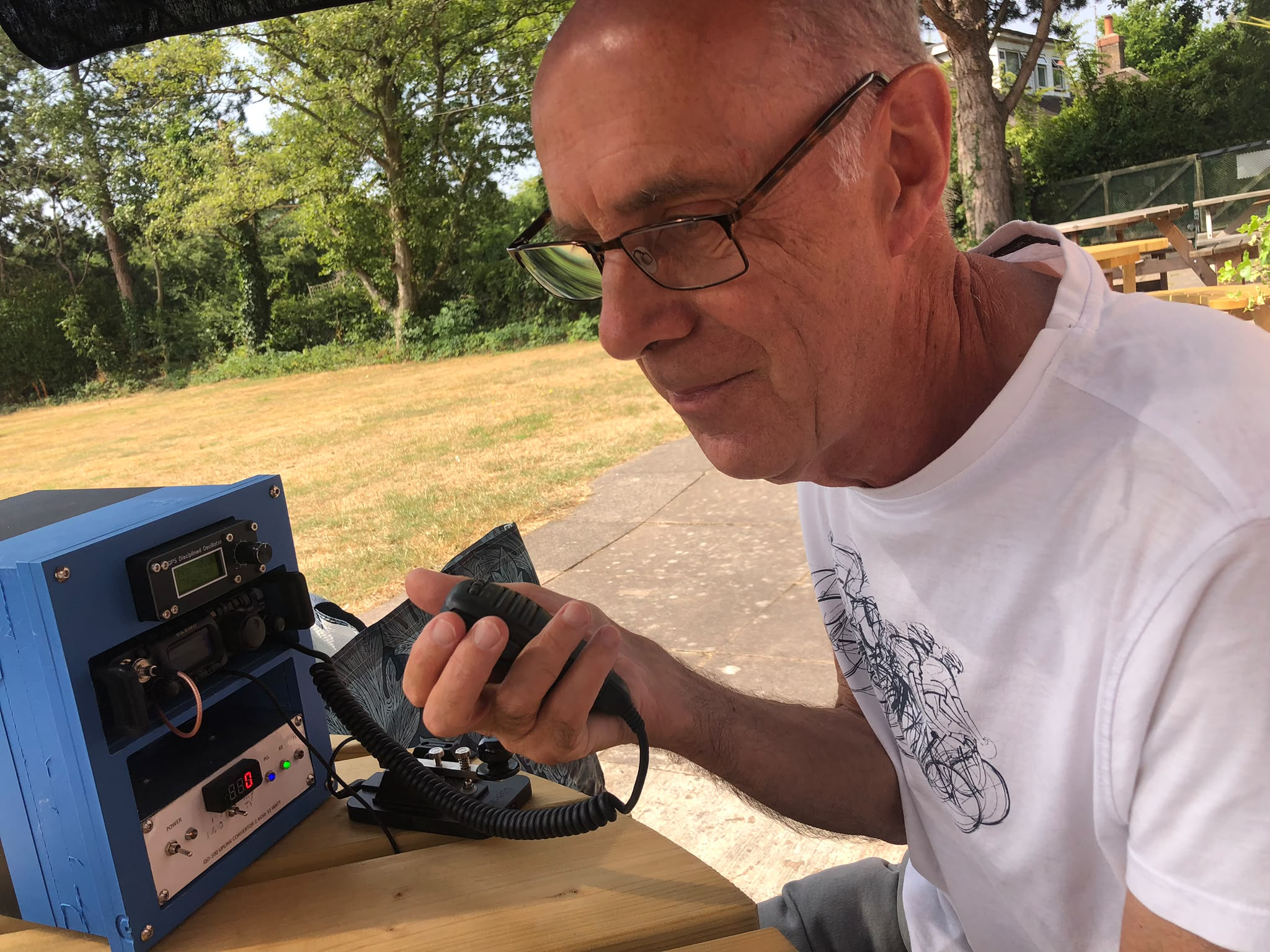
I took the exam on the 31st of July and got a provisional pass but, due to the vagaries of the local postal service, I had to wait two weeks for confirmation, at which point I immediately jumped on the Ofcom website and got my callsign – M7XRH.
A couple of weeks later, during another Friday session, Chris again let me set up the Kenwood and call CQ, but despite repeated attempts, no one answered. Ian M0LQY then showed me how to connect it to WSJT-X, where we quickly made contacts around the world.
Chris kindly lent me his QMX to try at home, however I had no contacts after multiple attempts. Without an ATU, my long-wire may not have been resonant, or the battery too low.
Not to be daunted, I ordered a kit; however, due to component supply issues at QRP Labs dispatch it is currently delayed. In the meantime, I bought and built a Kanga pocket ATU kit, ready for when the QMX arrives.
Desperate to get on air, Ian M0LQY had suggested that the Xiegu G90 would be a cost-effective starting transceiver for foundation level which outputs up to 20W.
I joined the Facebook G90 users' group to understand other people's experiences, and most people raved about it, particularly its very capable built-in ATU and SWR scanner.
I ordered one from Sinotel UK in Warwick. It arrived the next day.
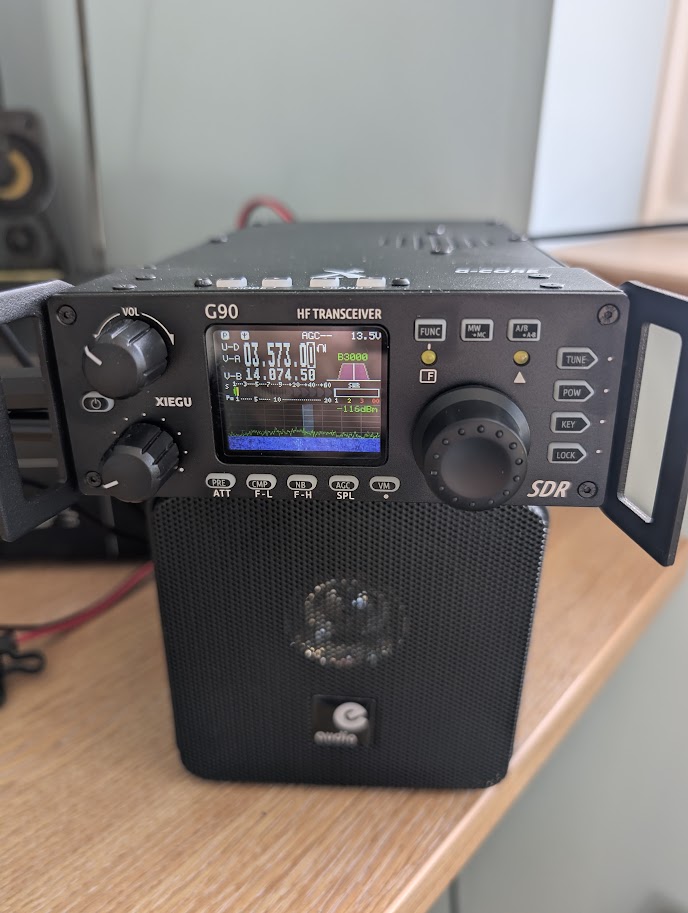
Set up was easy, following my DeepSeek AI crib sheet for FT8, with a Digimode 4 interface from XGGComms (ironically based in Stoke Prior where Wythall RC set up demonstration stations at the annual Steam Fair).
I was up and running in about an hour, and using JTDX and Logger32 was able to work my first four confirmed contacts; three in Spain and one in Italy, all on 20m at 5W with a crude long wire and 9:1 balun.
Lee G0MTN assisted me in setting up my call sign in the Club's DXCC log so I can start logging contacts for our annual DXCC challenge.
I really enjoyed the time I spent with Ian M0LQY at the Stoke Prior Steam Rally setting up and running the FT8 station, despite the rain shorting the HF antenna!
So, what is next? I need to set up a better antenna (subject to my wife's approval), so a chance to experiment with different options.
I will get the QMX built when it arrives, that should provide a great portable option that I can use with the very capable FT8TW android app.
I have investigated options for an Intermediate Licence course and emailed the Club’s training coordinator Chris EYO, who recommended contacting Steve Hartly G0FUW who runs the Bath remote course. The upshot is I am on the list for that, starting the end of the year.
I will also have a tentative go at learning Morse code, as it would be a good exercise for my aging grey cells!
It has been a long journey, but finally it’s come together, and I am looking forward to a great future in this exciting hobby, if but a little late.
A big thank you to everyone at Wythall RC who has encouraged me over the last 3 months, and I hope I can make a contribution to Club activities in the coming years.