 RSGB News
"Let's build some HF radios as a Wythall Radio Club project!"
That sounded like a good idea, and six members signed up straight away.
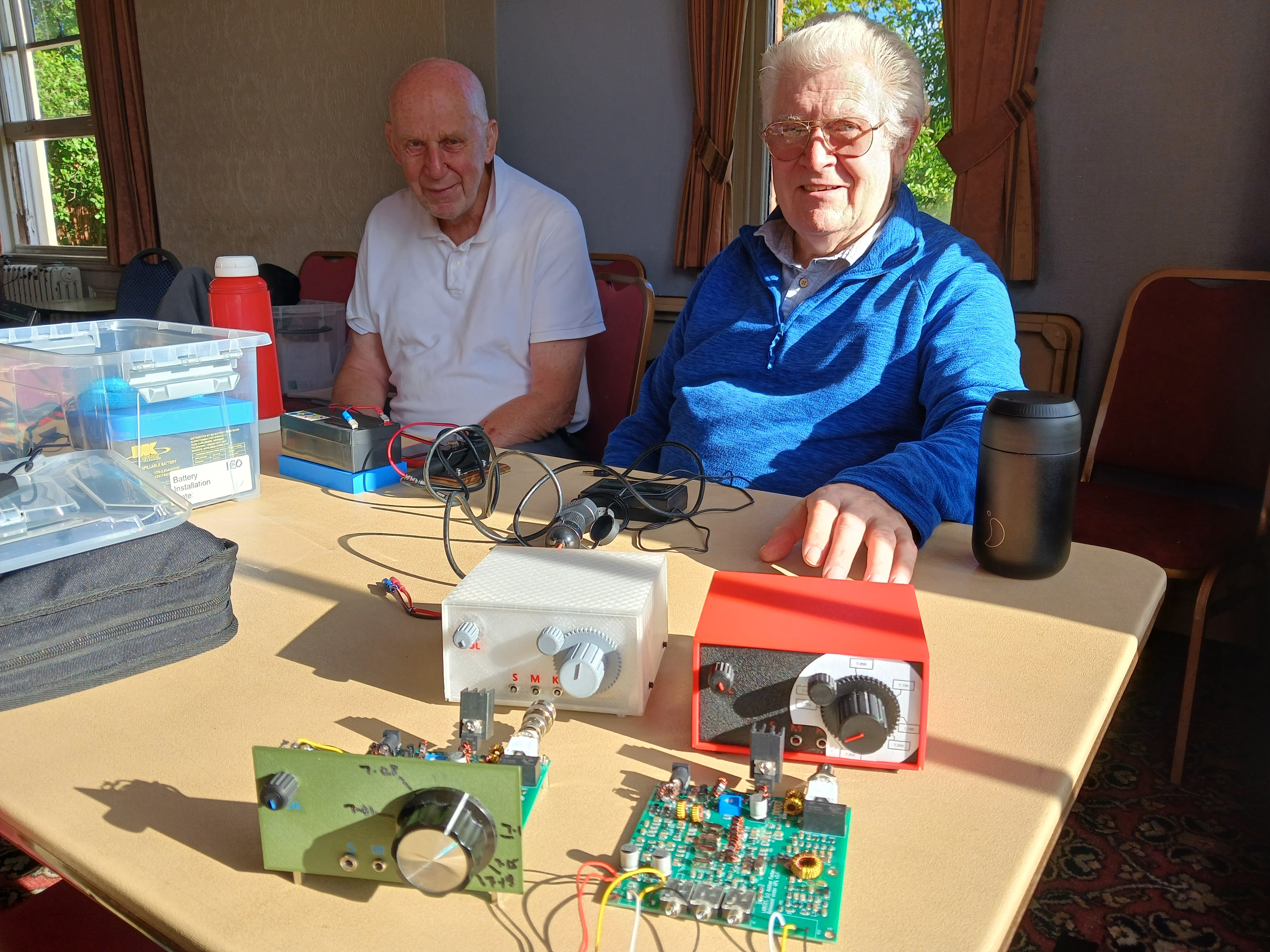
We purchased 6 LARCsets from HF Signals, stimulated by an article in the QRP ARCI magazine.
The LARCSet is an all-analog SSB/CW transceiver kit that you can put together in a day. It is easy to build, easy to operate radio that brings back the fun of all analog, simple but functional radios back to the ham world.
This superhet transceiver covers the 40-meter band with CW and SSB capability and a power output of around 4 watts.
The LARCSet was developed by Ashhar Farhan, VU2ESE and Sasi Bhushan, VU2XZ, of Lamakaan Amateur Radio Club so that hams can get on-air inexpensively with self-build radios that the builder can understand, fix and extend.
At only $39 (£29) each or $150 (£112) for 5, this looked a good deal.
And, indeed it was!
Our sets arrived carefully packaged with all components, including a front panel.
There is a step-by-step instruction manual to download supported by a helpful video. The manual also explains the circuit and test procedures to check each stage works.
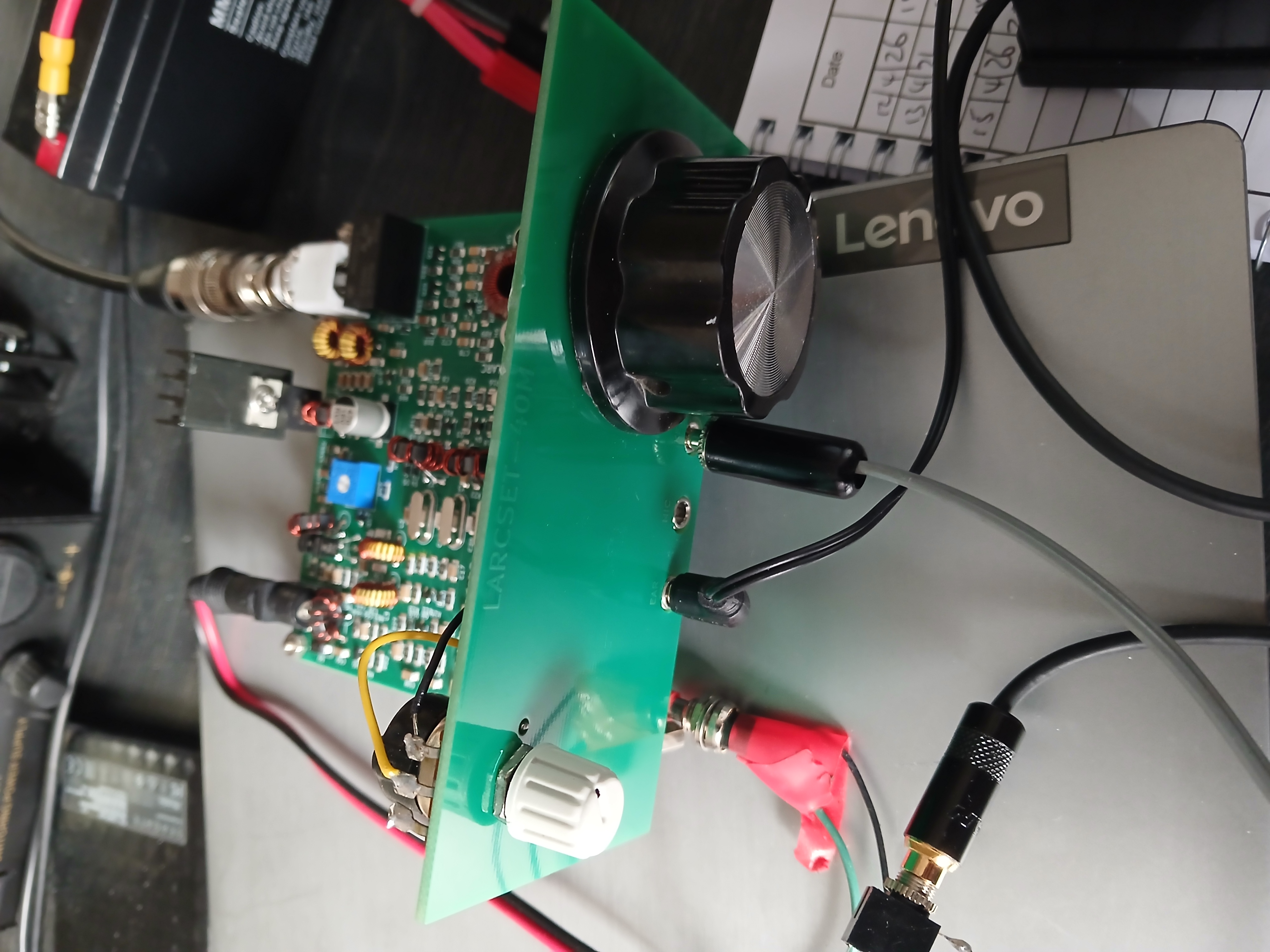
The PCB is already populated with SMD (surface mount devices), so there is relatively little construction work needed.
It’s perfect for the first-time constructor.
The components that need to be installed include the on-off/volume and tuning controls, relay, various transistors, heat sink, bias trimmer, toroids (some need to be wound), crystals, and power, speaker, key, microphone and antenna jacks.
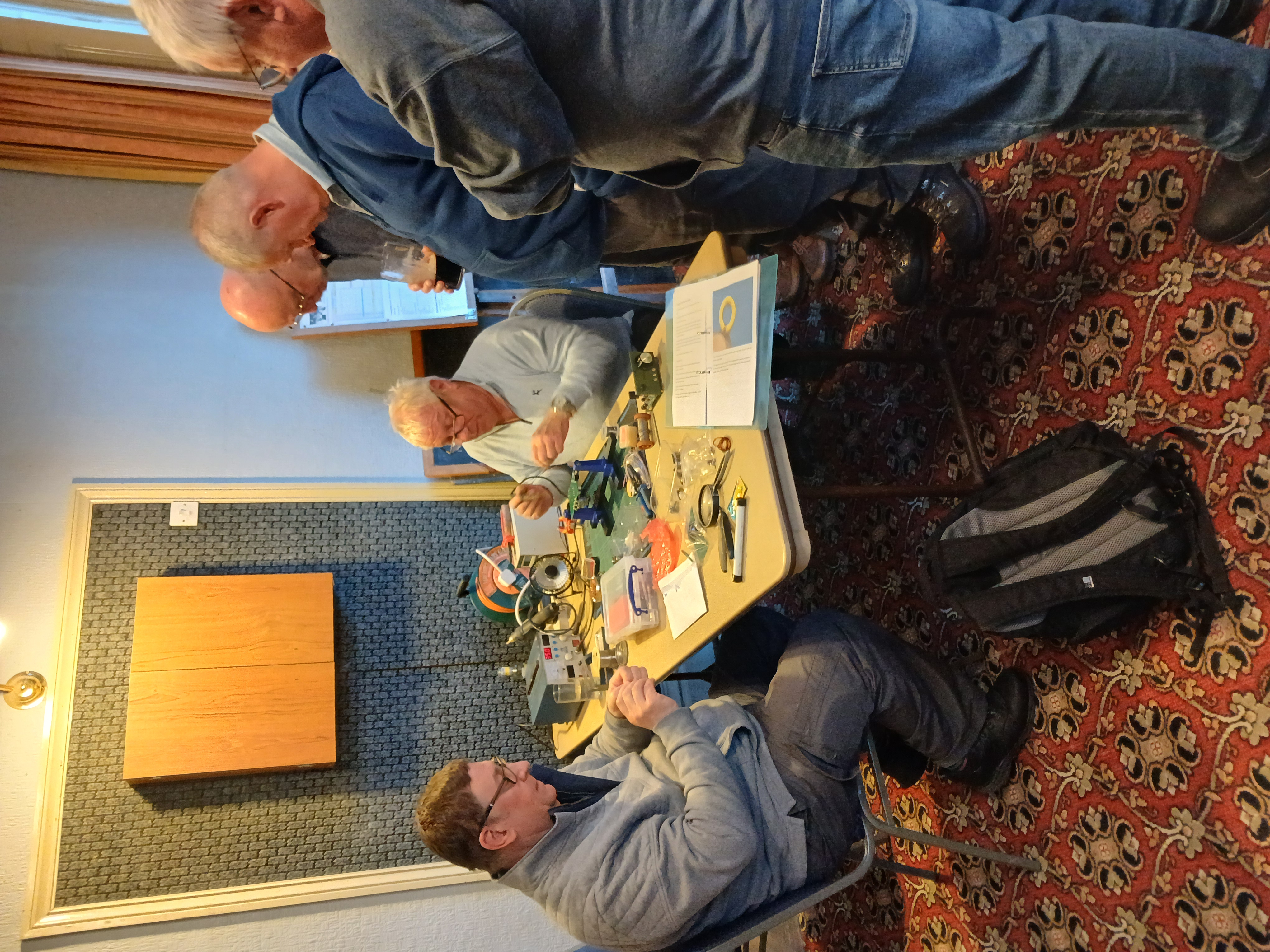
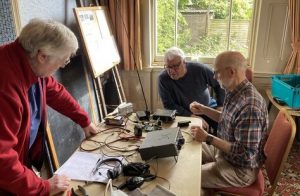
Construction was straightforward. Members with most construction experience assisted those for whom this was a new endeavour – we had a lot of fun working together on the build!
The fiddliest parts of the build are winding the toroids and adjusting the VFO torroid to get the radio operating on the 40-meter band. It’s important to follow the advice on winding and take time to do this. Then all will be well.
The manual suggests the VFO torroid adjustment is done once the local oscillator is installed.
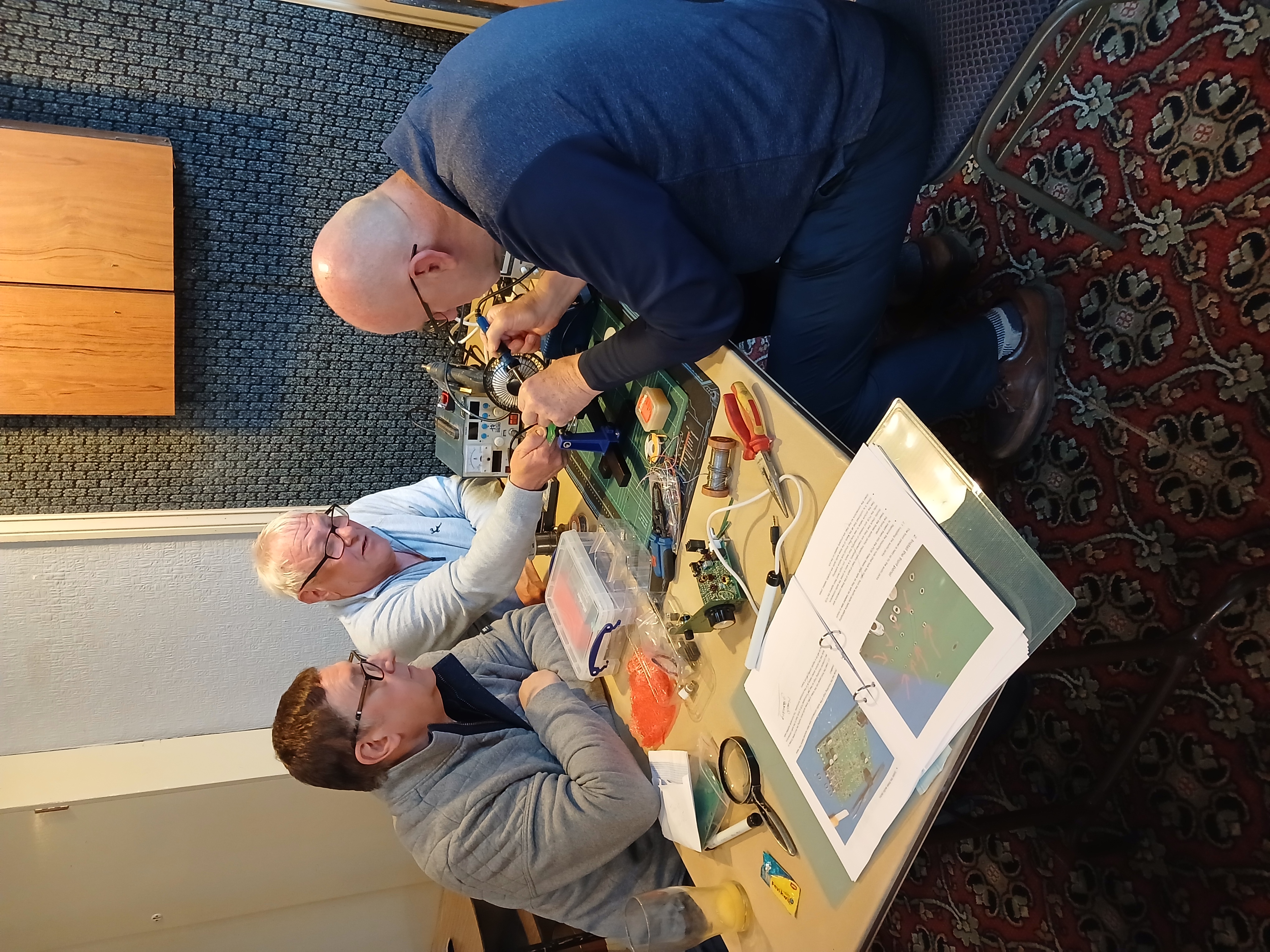
The LO operates on 4 MHz, and so the manual advises using a separate receiver to find the signal and then adjust the tightness of the turns so that the tuning control tracks from approximately 4.06 to 3.9 MHz. It then advises glueing the torroid to the pcb to fix the setting (glue is provided – a nice touch!).
We found that despite doing this the tuning at 7MHz wasn’t necessarily correct once the rig was finished. So, we adopted an alternative strategy of adjusting the torroid once the construction was complete, to enable the tuning control to cover the 40-meter band and then fixing it with glue.
If you do this, however, it’s important to remember that the tuning control operates in the OPPOSITE direction to that described in the manual for the 4 MHz adjustment.
The LARCset works fine with a straight key, but doesn’t have a keyer, so paddle enthusiasts will need an external keyer (e.g. the OSK kit as supplied by Kanga). The rig will happily drive headphones or a small speaker at good volume.
It’s a lot of fun operating the rig on-air. We’ve made contacts round Europe on CW with wire antennas. Power output on CW has been 3-4 watts.
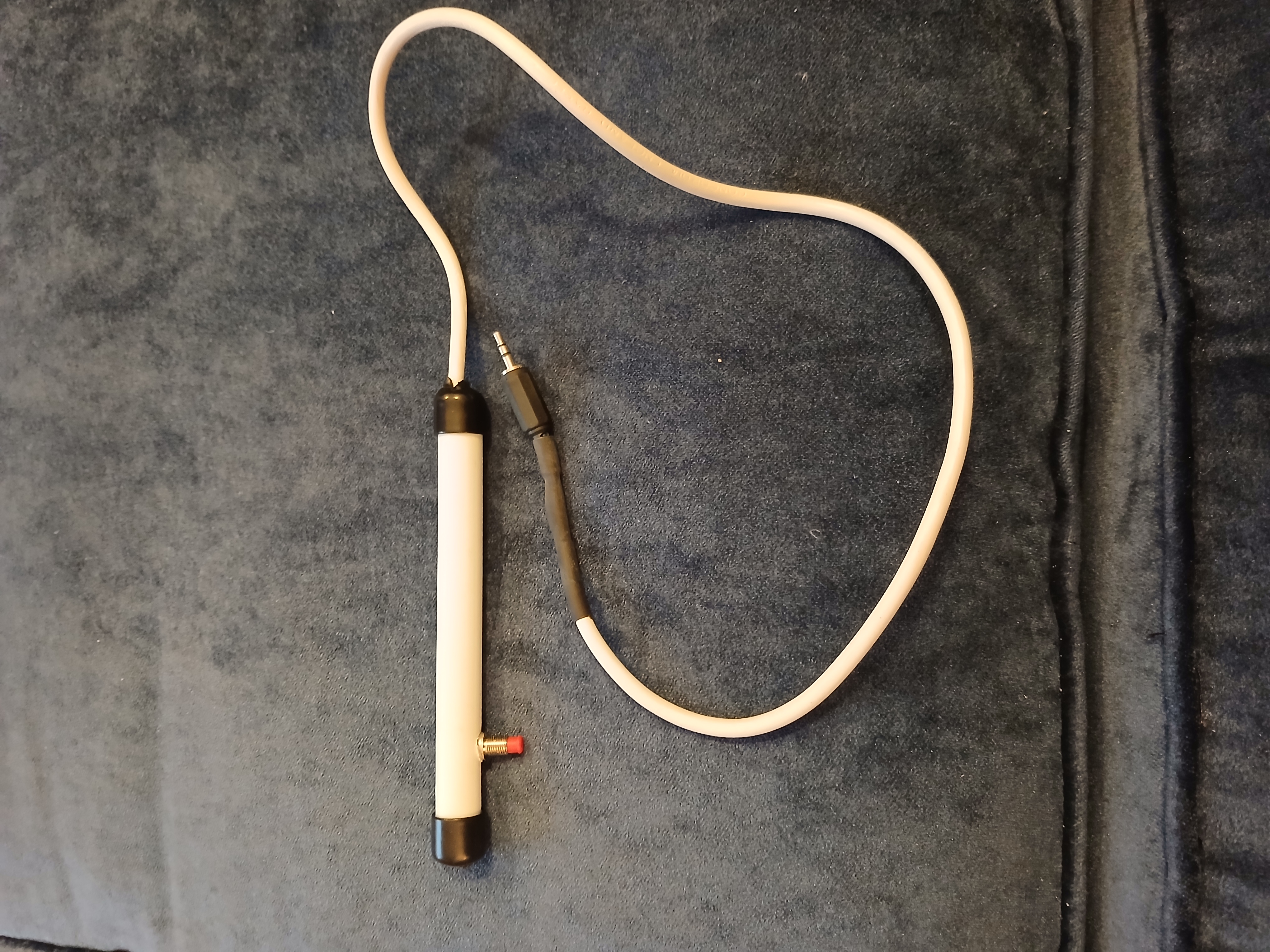
The kit comes with a mic insert and PTT button. We inserted this into thin piece of conduit following the design suggested in a QRPGuys web site (sadly, this web site is no longer available).
Chris G3YHF used this design to have a SSB QSO with MI3CGZ (Sammy in Strabane, Northern Ireland), receiving a 5x3 QSB report. Sammy was 57 with Chris. The power output of the LARCset was about 1-2 watts on speech-peaks.
It was necessary to speak directly in to the mic to generate enough drive. A commercial mic would probably work better.
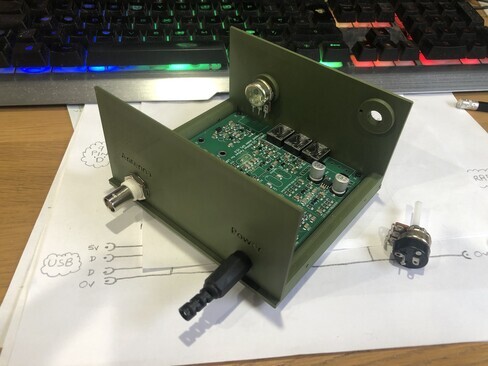
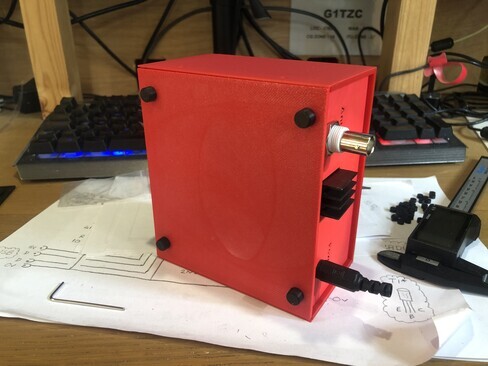
A front panel is supplied, but Neil G1TZC was keen to used CAD and his new 3D printer to create a complete enclosure.
After some trial and error, we all received an attractive box in which to install our LARCsets. Phil 2E0WTH’s stands out with its red and black, while Neil has white.
Neil also designed a simple bandspread tuning control connected to the main tuning knob with 3D-printed geared teeth to make fine-tuning easier.
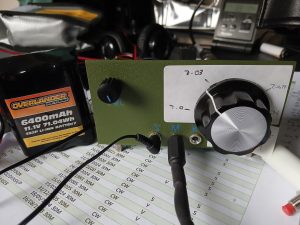
We had a lot of fun – and learning! – building these sets at our Friday morning Club meetings.
Give us a shout if you hear our rigs on-air!