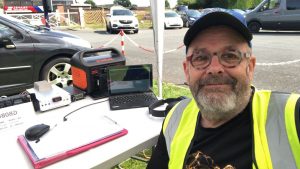
 Neil G1TZC, Wythall Radio Club’s enthusiast for using the QO100 geostationary satellite, recently took a trip to Guernsey. Of course, he took his portable satellite station and the Club’s dish with him. Here’s his report on his dxpedition.
Back in April 2023, I had a QSO with Keith GU6EFB.
The contact stood out for two reasons.
I’d not worked Guernsey before on QO-100 and the fact that I remember how enthusiastic he was for the hobby – more than just a ’59 thanks’ for the contact.
Fast forward to 2026. Debra, the ‘station controller’, booked a holiday on Guernsey. I was keen as I’d never been to the island and it also gave me the chance to activate GU1TZC!
The weather was very kind to us which made visits to various historical sites more enjoyable.
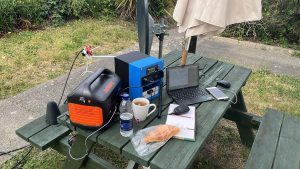 During the week there was time for three stints on the air under the GU call. 101 contacts were made in about three hours on air. Highlights included UAE, Iraq, Brazil and the Balearic Islands.
I had planned to visit the Guernsey Amateur Radio Society on the first Friday of our trip, but unfortunately illness scuppered that plan.
By the time the next Friday came round I felt much better. It was only a 20 minute drive to the club. To put that in context, nowhere is much more than thirty minutes away. So, in fact, it was a long haul journey by island standards.
On arriving at the society, I was met by an amazing building. It was a bunker! Some irony on that will follow. The door was open so I wandered in.
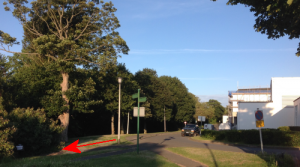
To give a bit of background, Guernsey Club meets in a WWII bunker built in 1940 by our DL friends. The arrow on the photo shows the way in!
Here in GU alone there are some 400 substantial German fortifications the roof of our club house is over 3mters thick of steel reinforced concert. Over 10% for all materials used in the German Atlantic wall were used in GU.
It was a little bit of a maze, but my ears were able to home in on the faint sound of HF in the distance. Following the sound, a person was eventually found. “Hi, I’m Keith – GU6EFB”.
Finally, some three years later, I met the person I had spoken to on air. Maybe it’s just me, but there is something special about meeting another enthusiast.
I didn’t do a head count but about fifteen members arrived during the evening, with a wide range of backgrounds and interesting stories.
As a club, it feels like there is passion for our hobby, and I was made to feel really welcome by all. The shack is superb – well laid out and clearly designed to be used, not just as an exhibit to be looked at. The club is very active in the community and takes part in POTA and Museums on the Mir, amongst others.
Although the society meets from 7.30 to 9pm, we finally left closer to 10pm. Many stories were told during the evening, from commuting across London on a season ticket and having to pay for the overground section because that wasn’t covered by the tube ticket, to sea planes damaged in the harbour, complete with jokes about landing it on the boating lake!
All in all, a fantastic evening, and recommended as a destination for any amateur visiting the island.
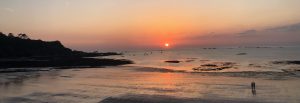
More GU1TZC satellite (and HF) operation is planned for 2027.


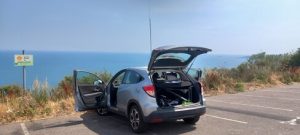 Despite the extreme temperatures, Wythall Radio Club members have been having fun – indoors as well as (ocassionally) outside!
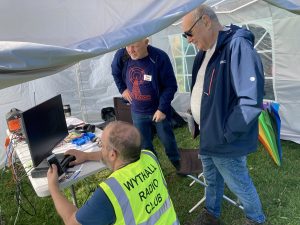
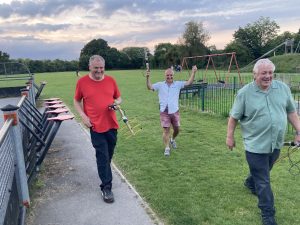
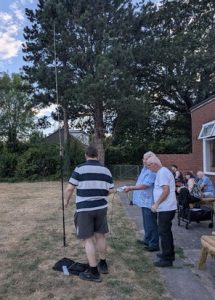 And David G7IBO, Pete M5DUO and Ian M0LQY are on the lawn outside Wythall House testing a vertical.
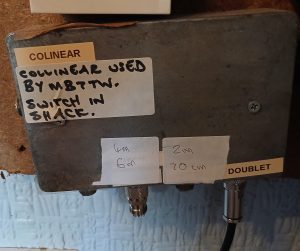 When setting up the Club’s rigs, members sometimes ask: “Where does this plug go?”
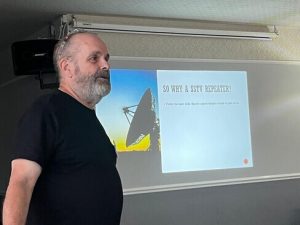 Meanwhile, Neil G1TZC has been promoting 2m SSTV with a talk at West Manchester Radio Club. He reports:
 See Wythall Radio Club members operating via satellite and short wave radio at
  Visitors of all ages are welcome.
 And chat afterwards in the bar of Wythall House.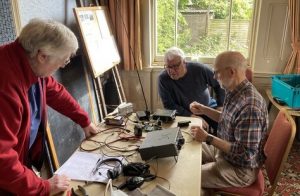
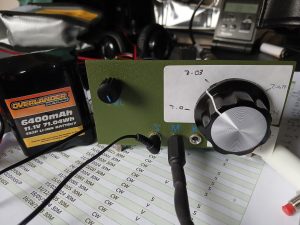 Just the job for a little refresher or first time soldering and coil winding – there will be expert helpers on hand to advise where necessary!
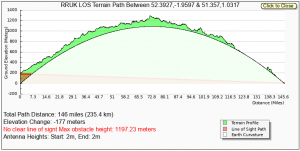
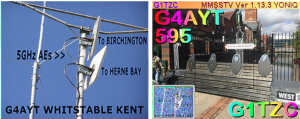
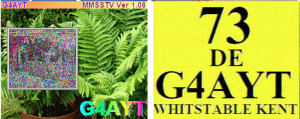
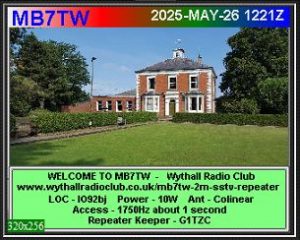 Things have been fairly quiet recently on MB7TW – Wythall Radio Club’s 2 meter SSTV (slow scan TV) repeater.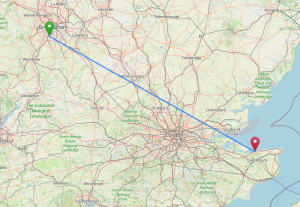
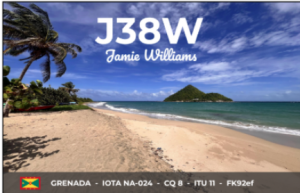 You can see behind the scenes of a solo dxpedition at Wythall Radio Club next Tuesday 7th April at 8pm.
  alacarte, SAMBA – these may sound like they belong at a dinner dance…..
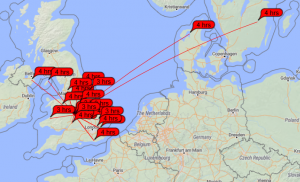 High pressure and early mist – maybe there will be some enhancement on 50MHz and 144MHz today?
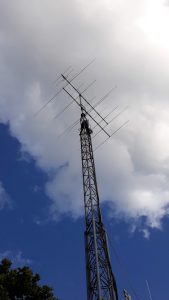 Lots of PSKreporter spots on 6m, with +1db from Sweden and -9db from Denmark – nice!