When you buy an auction lot of morse keys based on some remote auctioneer’s pictures and description, you can never be sure what you are going to find in your parcel when it eventually arrives.
Will the items be complete? Will they need extensive restoration or repair? Would it contain a rare collector’s item?
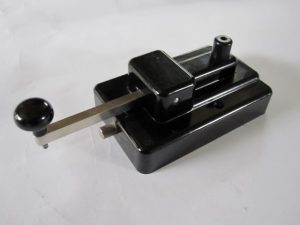
When I took the Morse Equipment Ltd Key from its packaging, I was attracted to the gracefulness of its design, its unusual spring tensioning and contact adjustment. It was in very good condition and didn’t need any restoration apart from a clean but it certainly warranted some research as to it history.
This model 605 landline key was originally known as Great Northern Telegraph Works, Copenhagen-Denmark Key and was made in the period ~1948 to 1969. However, it turns out that the key I purchased at the auction, is a British copy, made under licence by Morse Equipment Ltd, of Tring, Hertfordshire in the UK and marketed by Sedgewall Communications Group in the 1960/70’s.
I haven’t been able to exactly find out the nature of the relationship between GNTC and Morse Equipment Ltd. Both the British and Danish versions have the same pattern numbers in the Bakelite moulding.
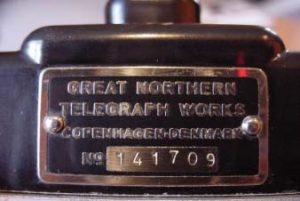
Figure 2 Label on GNT key
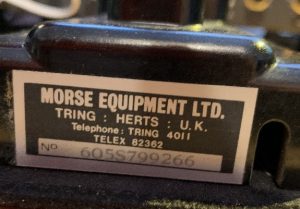
Figure 3 Label on Morse Equipment version
Looking at the base of this key I could see what looks to be spade terminals that are designed to mate with a fixed base of some kind.
From a Google search on PA3EGH’s website, I can see that GNT keys were also supplied with a Morse Inker machine 1515 which was used by the Royal Dutch Navy and other Signal Schools to check the quality of the Morse code that was transmitted by the operator.
The key clearly plugs straight into the base of the Morse Inker (See Figure 4).
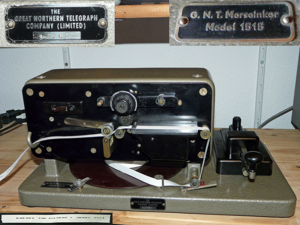
Figure 4 Morse inker machine 1515 with adjacent Key
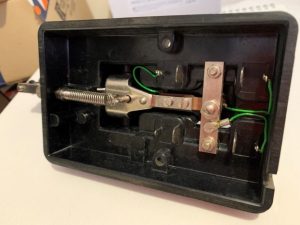
Figure 5 Under view of Key showing spade terminals
Three things stood out to when researching this key, which I thought, warranted further investigation.
- Who or what was The Great Northern Telegraph Company (GNTC) and why was this design of key attributed to them?
- Who were the Morse Equipment company of Tring UK and how did they get involved with GNTC? What other morse products did they make?
- The unusual, and possibly unique, spring tensioning arrangement on the key and its method of contact adjustment.
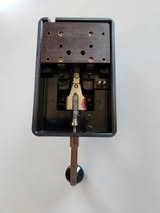
Figure 7 showing interface board fitted
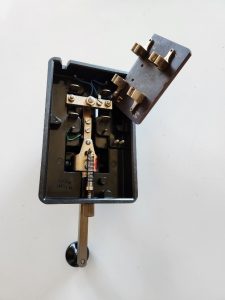
Figure 6: underside of key showing matching interface board
The Great Northern Telegraph Company (GNTC)
The origins of this company, go back to the mid-nineteenth century, where the development of the telegraphy method of sending messages in morse code, initially along railway lines, became well established and the prospect of sending telegraphic messages between countries and even continents via submarine cables became a real possibility.
The first transatlantic telegraph cable became operational on 16th August 1858, between Valentia Island of the west coast of Ireland to Trinity Bay, Newfoundland but the signal quality declined rapidly slowing transmission to an almost unusable speed. Sadly, due to an excess of applied voltage to try and improve the quality of the signal, the cable was destroyed after only 3 weeks.
A second cable was laid in 1865 with improved materials but when only half-way across it broke and was never found so repair was abandoned, A third cable was laid in 1866, luckily, they were also able to retrieve and repair the second cable so eventually there were two cables across the Atlantic.
One cannot under-estimate the impact that telegraphic communications had on the world in the nineteenth century. The ability to send and receive messages around the world in minutes rather than weeks was to have a profound effect on the commercial, political and financial life of the whole world and the race to cable up the planet was well under way by the close of the nineteenth century.
In 1868 a Dane, C.F. Tietgen, set up three small telegraph companies to connect Scandinavia, England and Russia telegraphically via submarine cables, which he did over the next three years;
- Danish-Norwegian-English Telegraph Company to lay a cable between England and Denmark and between Denmark and Norway.
- The Danish-Russian Telegraph Company to lay a cable between Denmark and Russia.
- The Norwegian- English Telegraph Company to lay a cable between England and Norway.
Shortly afterwards Tietgen merged the three companies to form the Great Northern Telegraph Company, with its headquarters and main works in Copenhagen. Throughout the rest of the nineteenth century and the beginning of the twentieth century, the company continued to expand with cables being laid across Russia via Siberia to the Russian Pacific then onto Japan and China.
The Company also started laying cables between Denmark and France and between England and Sweden and eventually between Sweden and Finland. Due to the expansion of international trade and shipping, the demand for telegraphic communications continued to grow rapidly and so the GNTC continued to expand. Figure 8 shows the 1907 route map.
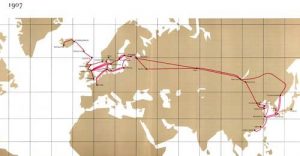
Figure 8: GNTC Route map 1907
During the First World War 1914-18, the Company was able to continue its normal activities and although some cables were damaged, repairs had to be deferred owing to the presence of mines and wartime conditions in general.
Improvements in cable technology meant that the volume of traffic was able to increase despite these war-time interruptions. The GNTC was just one of many hundreds of cable companies around the world that existed to satisfy the never-ending demand for telecommunications. Some of these were to become state-owned, some remained private corporations. Some still exist and some have disappeared completely and some are known by other names.
After the First World War, all were to feel the competition from the development of radio communication circuits as an alternative to submarine cables. The Company went on to develop radio circuits in addition to their cable routes but the competition from the predominantly state-owned radio routes gradually became tough for all cable companies.
At the same time as the rapidly increasing number of international radio circuits was limiting the volume of traffic on the Company’s submarine cables, the economics of their cables was further weakened by the decline in telegraph charge rates and by rising operating costs.
However, the Company sought to reduce the effects of these by continuous technical improvements in cable design and the development of faster transmission modes such as Telex/Teleprinter. They gave new life to the submarine cables and the use of hand sent morse started to decline.
Fortunately, during the 1930’s and 1940’s the Company developed a strategy of investing in various companies across the various industrial sectors, including batteries; radio telephones (Storno); telephones (Telematic); measuring instruments (Elmi) and hearing aids (Danavox).
In 1985, The Great Northern Telegraph Company changed its name to GN Store Nord with the aim of creating a new group identity and organising its businesses. In this process, all subsidiaries were re-named to include GN: GN Danavox, GN NetTest, GN Automatic, etc.
A major change happened in 1991 when GN was assigned the attractive GMS concession from the national Danish telecommunication authorities. In March 1992, GN’s new subsidiary Sonofon opened the first private mobile telephone network in Denmark. With the blossoming of the data communications and telephony industry, GN was back on track and enjoyed big success in the late 1990s.
In 2000, the company sold Sonofon to the Norwegian telecom operator Telenor. However, it was also about this time that the world-wide boom in telecoms companies suddenly became a bust. Many major telecommunications companies were forced to sell off subsidiaries, to avoid bankruptcy.
GN Store Nord’s headquarters are currently in Ballerup, North of Copenhagen, Denmark, focusing on its two core businesses; hearing aids and headsets, where it has demonstrated continued success in developing new technologies.
The Morse Key
I have not been able to conclusively establish who this key was designed by. I have to assume that GNTC themselves designed the key and originally manufactured it in its Copenhagen Works.
Given that GNTC established themselves as manufacturers and designers of numerous telecommunication and audio products, this would seem plausible. However, I have also seen it referenced as the Danish Ericsson Style Long Lever Key on some websites. But how did it come to be manufactured by Morse Equipment Ltd and marketed by Sedgewell Communications? What was the relationship between these three parties?
I found an advert for Morse Equipment Limited of Tring in a 1973 issue of The Wireless World, which I have reproduced below. During and after the Second World War, there was a huge demand for telegraphy equipment such as teleprinters, telex machines, inkers, undulators, perforators, tape transmitters and morse keys and the advert clearly demonstrates this. (See Figure 9)
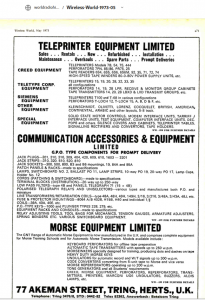
Figure 9 Morse equipment Ltd Advert from Wireless World 1973
The morse key itself is quite stylish, being housed in a fully enclosing Bakelite cover. These keys would have been used to key valve transmitters so hence the need for the safety cover to avoid touching the terminals, where there might be 50-60V at a few mA.
It has no weight to it so would have to be screwed to something substantial to avoid drifting around the operating table. This why it was designed to mate with something else via the spade terminals and fibre board arrangement. Like many morse keys from Scandinavia it has a long lever arm.
The contact points are easily adjustable from a slotted screw accessed from the top. Contact is made when the lever is pressed, and the lever arm contact rises to connect to its mating contact. The gap is easily visible through the housing so setting the gap using a feeler gauge is possible. (see Figure 10).
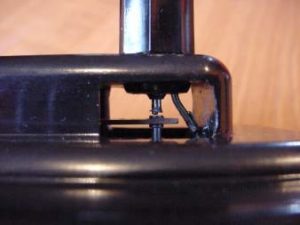
Figure 10 Contact access
Unlike most straight keys the lever arm tension spring is mounted horizontally rather than vertically and is connected to a spigot which forms part of the lever arm pivot arrangement. The spring tension is adjusted via a knurled knob which sits just under the lever arm. (see Figure 11)
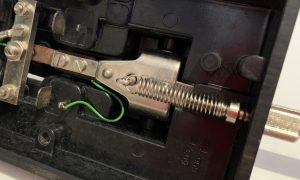
Figure 11 Spring Tensioning
I connected the key to my morse oscillator to get a feel for how it would be to use. It was ok. I could probably spend some time in getting the contact gap and spring tension more to my liking but to do that requires some time on a long QSO.
For that I need to find a suitable heavy base to give it some steadiness. I probably won’t do that, but either keep it in the collection or pass it on to another collector. I doubt it will take the place of my Marconi NATO key as my preferred straight key for operating.
Chris G0EYO
April 2025
References:
I used a great many resources to research this article. I am unable to identify individual sources but the following were very helpful;
https://atlantic-cable.com/CableCos/GreatNorthern/index.htm
https://www.tronico.fi/OH6NT/keys.htm
http://w1tp.com/imwyn.htm
http://w1tp.com/iperkcol.htm
https://www.webx.dk/oz2cpu/key6.htm
https://www.pa3egh.nl/morse-keys-from-europe/morse-keys-denmark/
https://www.facebook.com/groups/1232401453542260/ (CW Bugs, Keys & Paddles)


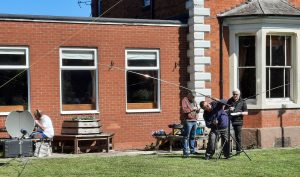
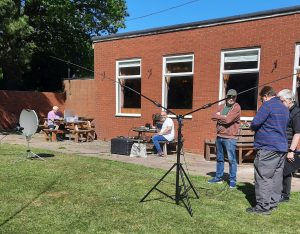 Meanwhile Ian M0LQY was using a QRPLabs QDX 5w digital transceiver and a SOTABeams bandhopper antenna to make FT8 contacts over a wide area.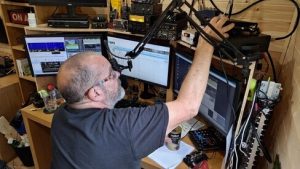
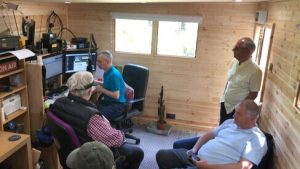
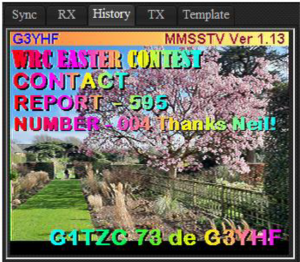
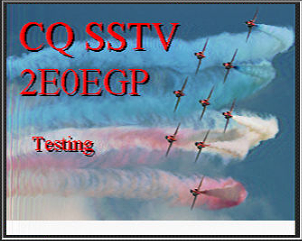
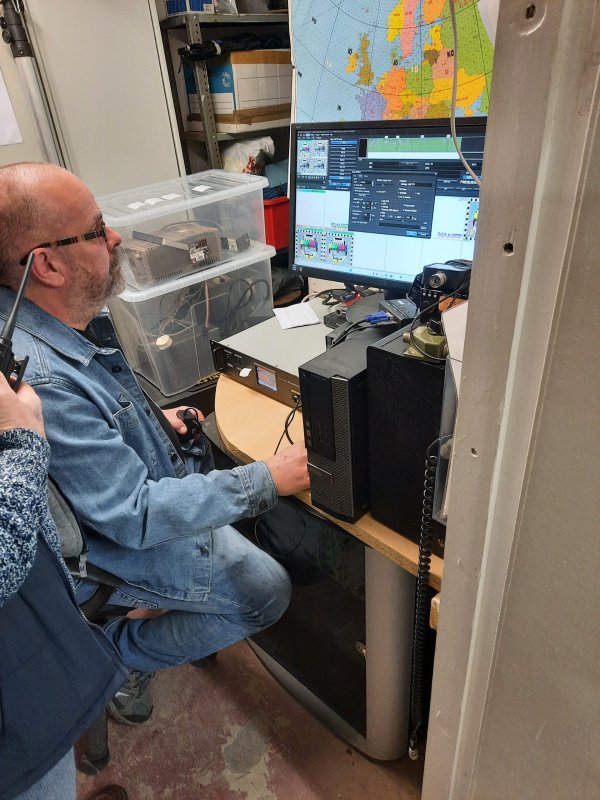
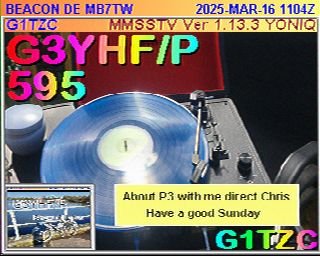
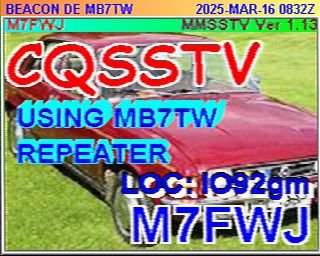
 Members made use of FM, SSB, CW, FT8, D Star, Echolink and SSTV (slow scan TV – using the Club’s MB7WL SSTV repeater).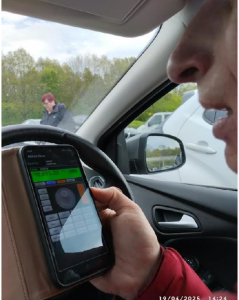
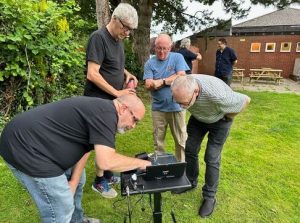
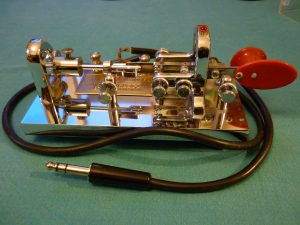 Having owned a Vibroplex in the past, I was intrigued to see him clip a clothes peg on to the vibrating ‘dots’ arm during our qso.
 Lee GoMTN made remote QSOs from Poland, Munich, and the centre of Birmingham, using his mobile phone to access his home rig. There was much greater use of CW, with 5 members active most days.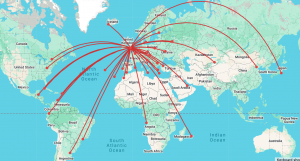
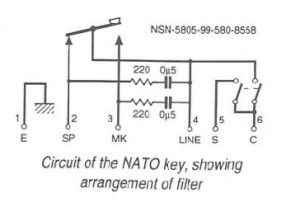 And not just CW operating! Chris G0EYO has continued the restoration of his historic Morse code key collection…. as
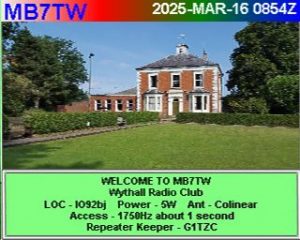 Wythall Radio Club is pleased to announce its new SSTV repeater is now live on-air.

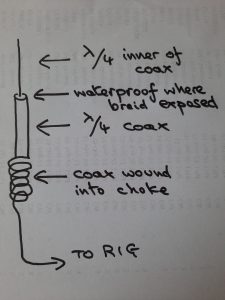 It comprises a quarterwave radiator made from the centre of a length of coax, below which is a quarterwave of complete coax that is then wound into an rf choke. The tail of the coax beyond the choke forms the feeder.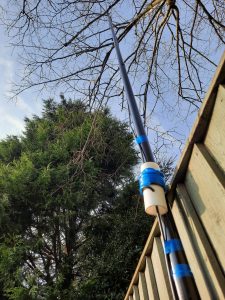
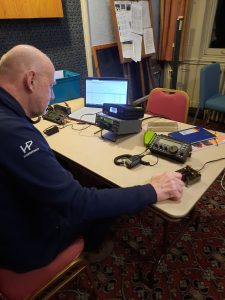 The top scorers were John 2E0XET with a stupendous 3543 miles/watt for his 1-watt CW QSO with Virginia USA and Lee G0MTN’s 713 miles/watt from his 10-watt digital contact with Argentina.
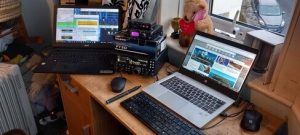 Down in devon, Kev started off using 10 watts of FT8 but then dropped down to 5 watts for the last 2 weeks to see what could be achieved.
 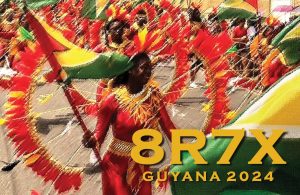 73,500 QSO’s .. poisonous snakes and machetes.. 30 degrees of sweltering heat and high humidity…. welcome to Jamie’s world (M0SDV) last February 2024 as he and three other like-minded young operators visited this rarely activated country on the northern tip of South America for an operation that proved to be enormously popular.